
So like, if diplomacy had eras, Canada is officially in its show up, bring receipts, and don’t pretend vibes alone will stop missiles phase. Prime Minister Mark Carney is heading to Paris next week to join French President Emmanuel Macron’s meeting of the so-called Coalition of the Willing — more than 30 countries backing Ukraine, all trying to land the world’s hardest group project: a negotiated peace with real security guarantees.
Macron basically soft-launched the summit in his New Year’s Eve address, promising that allies would make “concrete commitments” to protect Ukraine and secure what he called a “just and sustainable peace.” Translation: this isn’t a photo op. It’s about deterrence, defence, and making sure Russia doesn’t just pause, rearm, and do this all over again.
Carney will be in Paris Monday and Tuesday, according to his office, though — very on brand —keeping his specific goals vague. What they did say is that Canada is “working relentlessly” with allies to deter aggression, fortify Ukraine, and help it rebuild into something that looks like an actual future, not just a ceasefire-shaped illusion.
Meanwhile, the stakes could not be clearer. Just days before the Paris meetings, Russia launched another massive missile and drone attack on Kyiv, killing at least one person and wounding dozens. Explosions echoed across the city for hours. Moscow claimed it was targeting energy infrastructure used by Ukrainian forces, but residential buildings were hit — again. Ukrainian President Volodymyr Zelensky didn’t mince words, calling the strikes “Russia’s answer to our peace efforts” and describing Vladimir Putin as a “man of war.” Not subtle. Not wrong.
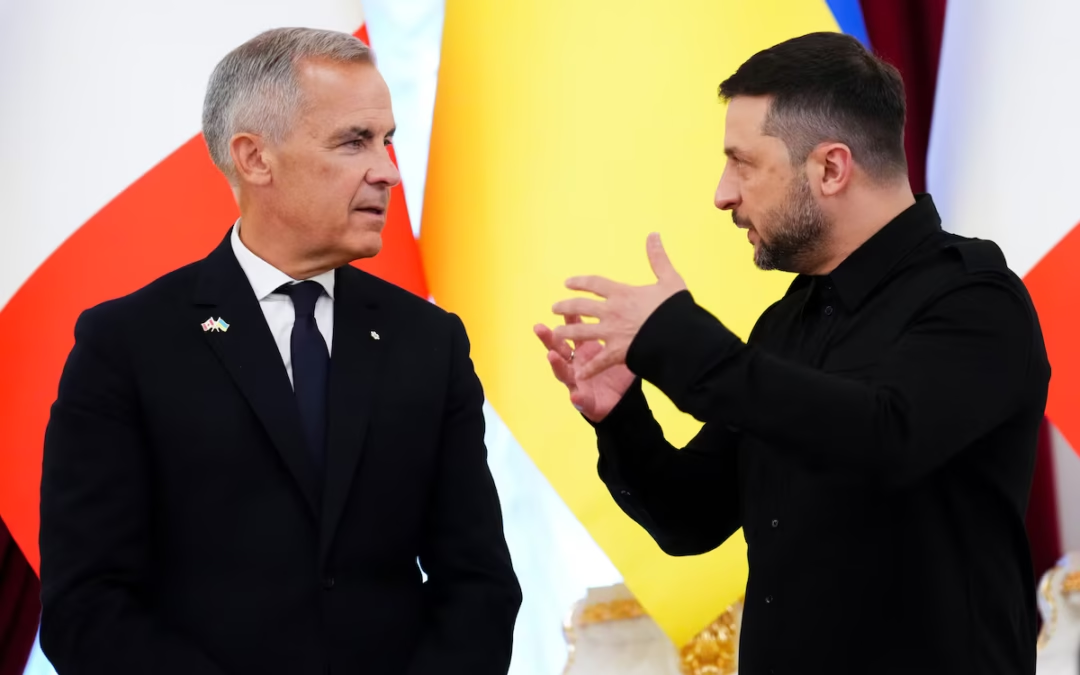
It was against this backdrop that Zelensky briefly stopped in Canada, touching down in Halifax en route to Florida for talks with U.S. President Donald Trump — talks he described as “very important and very constructive,” even as missiles were literally falling back home. At the Halifax airport, Zelensky and Carney stood side by side, embraced, and delivered a very clear message: Canada is not wavering.
Carney announced $2.5 billion assistance for Ukraine, on top of the more than $20 billion Canada has already provided since Russia’s full-scale invasion began in February 2022. That money isn’t just symbolic — it’s designed to unlock nearly $10 billion more from institutions like the IMF and the World Bank, fund reconstruction, and help guarantee loans to shore up Ukraine’s battered energy system. As Carney put it, “The barbarism that we saw overnight… shows just how important it is that we stand with Ukraine at difficult time.”
Zelensky thanked Canada for its consistency (rare in global politics, honestly) and stressed that peace talks are now about the hardest details: security guarantees, territorial integrity, and what happens after the war ends. He’s been clear that Ukraine will never recognize occupied territory as Russian — not Donetsk, not Zaporizhzhia, not under “any circumstances.” He’s also said the U.S.-backed peace plan is about 90 per cent ready, but that remaining 10 per cent is where wars are either prevented… or rebooted.
Before Paris, 15 countries reps are meeting in Ukraine, with NATO and EU representatives involved. Military chiefs will follow, hashing out how guarantees would actually work in the air, on land, and at sea. Zelensky summed it up bluntly: getting this right is the goal “for all normal people.”
Late last month, Carney and Zelensky already previewed this alignment during a meeting in Halifax. Paris is where it gets tested — politically, militarily, and morally. Because everyone at that table knows the same thing: a peace without guarantees isn’t peace. It’s just a countdown.
And Canada? Still very much choosing the “stand there, help rebuild, and mean it” lane.
XOXO,
Valley Girl News
Not a vibe check — a reality check


