
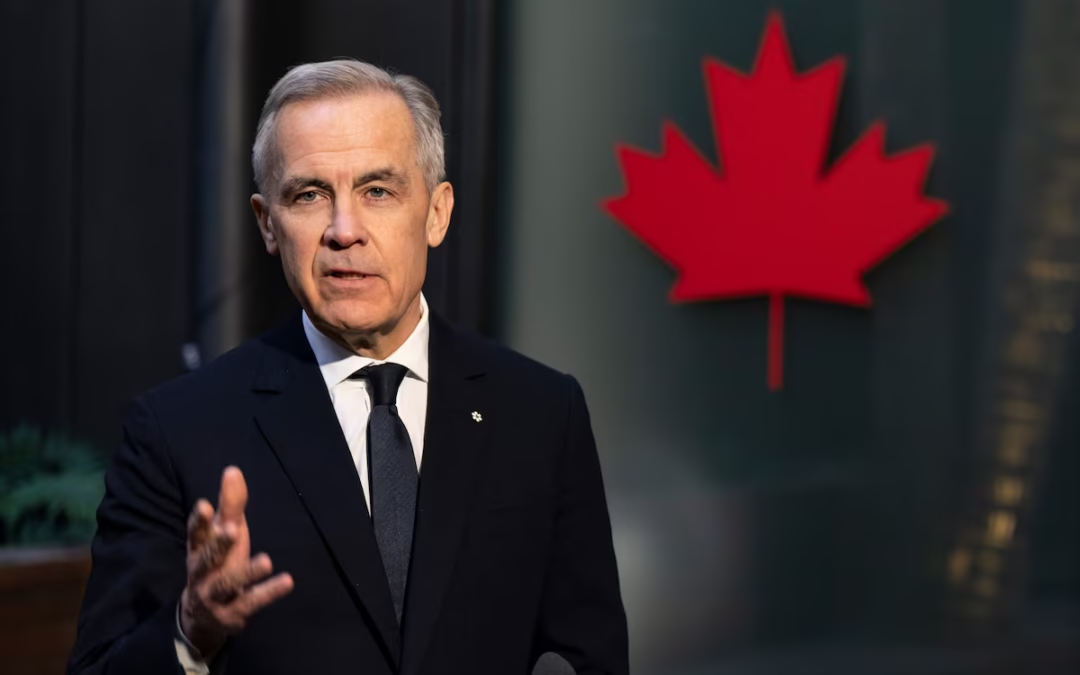
Okay so like… deep breath, because this story is doing a LOT. We’ve got Venezuela, oil, Donald Trump doing Donald Trump things with the military, Canada quietly side-eyeing the situation, and Prime Minister Mark Carney basically saying: everyone relax, we’ve got spreadsheets.
Here’s the vibe. After a U.S. military strike that led to the capture of Venezuelan strongman Nicolás Maduro (yes, captured), President Trump made it pretty clear that this wasn’t just about “freedom” or “democracy.” This was also very much about Venezuela’s oil. And not just any oil — we’re talking the largest proven oil reserves in the world, the kind that makes energy markets tremble and Canadian producers go, “Um… should we be worried?”
Carney’s answer from Paris? Not really. Speaking on the sidelines of a very serious-sounding meeting called the Coalition of the Willing (which honestly sounds like a Netflix political thriller), Carney said Canadian oil will stay competitive because it’s “low-risk,” increasingly lower-emissions, and — crucially — now has a clearer path to global markets thanks to a new pipeline agreement with Alberta. Translation: Venezuelan oil might be rich, but Canada is stable, boring, and bankable. And in energy markets, boring is hot.
Yes, Venezuela’s heavy crude is similar to oil sands oil, and yes, even a modest production bump could shake things up. But rebuilding Venezuela’s oil sector would take years and tens of billions of dollars — assuming U.S. companies even want to touch it while the country remains politically fragile. So Carney’s message is very “medium-to-long-term girlie,” not a panic spiral.
Meanwhile, Pierre P. popped up to say Carney is being way too chill, warning Venezuelan oil could steal Canada’s lunch and demanding pipelines like it’s a Marvel origin story.
Ottawa, for its part, is watching Trump like a hawk in yoga pants. Canadian officials admit they’re in wait-and-see mode, trying to figure out whether Venezuela was a one-off or the opening act. Cuba? Drug cartels in Mexico? Greenland?! (Yes, Greenland. Again.) Trump has revived his obsession with annexing the Danish territory for “national security,” and suddenly those comments feel less hypothetical after watching U.S. troops roll into Caracas.
Carney, to his credit, is drawing a firm line. Canada supports the removal of Maduro — a leader Ottawa has called illegitimate since 2019 — but does not support countries casually grabbing territory or resources. He’s been very clear that Greenland belongs to Greenland and Denmark, full stop, and that Arctic security should be handled through NATO, not vibes and unilateral raids.
Diplomatically, Canada is also threading a needle. Ottawa didn’t outright condemn the Venezuela strike, partly because… awkward… Canada spent years calling for Maduro to step down. But Carney also made a point of reaching out to opposition leader María Corina Machado, stressing that Canada wants a Venezuelan-led democratic transition — not Trump running the country like a hostile takeover.
All of this is happening while Canada braces for upcoming USMCA renegotiations, where Trump is expected to push hard for American advantages. Which is why this whole episode just reinforces Carney’s bigger strategy: less dependence on the U.S., more strategic autonomy, higher defence spending, and a Canada that can stand on its own when Washington gets unpredictable.
So yes, this is about oil. But it’s also about sovereignty, alliances, and a world where the rules feel… flexible, depending on who has the biggest military. Canada’s response so far? Calm, cautious, and quietly preparing for a future where the old “special relationship” with the U.S. is no longer a given.
Like, welcome to geopolitics in 2026. Same chaos, higher stakes, better carbon capture.
XOXO,
Valley Girl News
Where vibes are checked, and facts included


